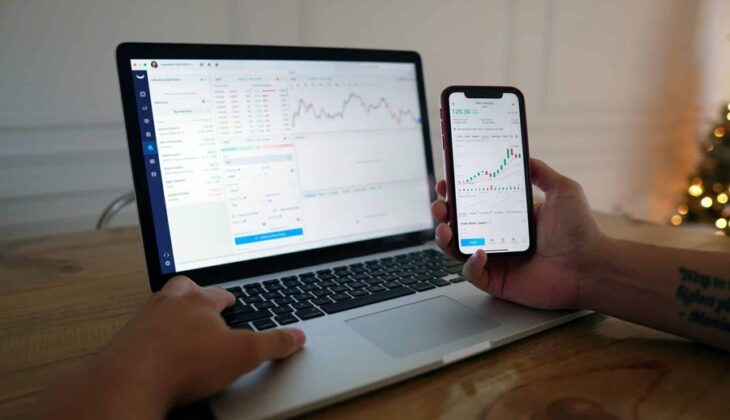
A Stocks App can bring market research, watchlists, portfolio tracking and order access into one digital interface. For investors, that convenience can make it easier to follow companies and review holdings without switching between multiple platforms.
The value of a stocks app, however, depends on how the features are used. Market data, charts and alerts can support better decisions, but they can also encourage frequent checking and unnecessary activity when there is no clear investment plan.
The strongest approach is to connect each feature with a specific purpose and understand its limitations before relying on it.
Research Tools: Useful for Building Context
A stocks app may provide company information, financial ratios, price history, market news and other research inputs. These features can help investors build an initial understanding of a company before deciding whether it deserves deeper analysis.
The practical use is simple: instead of starting with price movement, investors can first review the business, sector, financial trends and valuation. This creates a better foundation for deciding whether the company fits the portfolio.
The limitation is that app-based research can sometimes be too condensed. Investors should avoid making a decision from one ratio, one news item or one highlighted metric without understanding the broader context.
Watchlists: Better for Observation Than Impulse Buying
Watchlists allow users to monitor selected stocks without purchasing them immediately. This can be useful when an investor wants to study a company over time, wait for better valuation or compare several opportunities.
A well-organised watchlist may separate long-term ideas, sector-specific companies and stocks requiring further research. This makes market monitoring more focused and reduces the need to search repeatedly for the same names.
The limitation appears when a watchlist becomes too large. Tracking dozens of securities can create noise and make it harder to distinguish meaningful opportunities from normal market movement.
Portfolio Tracking: Useful for Seeing the Bigger Picture
A portfolio section can help users view holdings, invested value and changes in market value from one place. This becomes increasingly useful as the number of investments grows.
Instead of looking at each stock separately, investors can review whether the portfolio is too concentrated in one company or sector. They can also see whether certain holdings have become disproportionately large after strong price performance.
The limitation is that frequent portfolio checking can encourage emotional decisions. Long-term investors may benefit more from periodic reviews than from reacting to every daily change.
Alerts: Helpful When They Are Selective
Price alerts, news alerts and corporate-action notifications can help investors stay informed without watching the market constantly. A carefully chosen alert can draw attention to an event that genuinely matters.
For example, an investor may set an alert for a valuation level, a major price movement or a company update that could affect the investment thesis.
The limitation is alert overload. Too many notifications can make every market move feel urgent, even when no action is required.
Charts: Valuable for Context, Not Certainty
Charts can help users understand historical price behaviour, trends and volatility. They may also be useful for traders who rely on technical analysis.
For a long-term investor, charts can provide context around how the stock has behaved across different market periods. They can also show whether current price movement is unusually volatile compared with the past.
The limitation is assuming that a chart can predict future movement with certainty. Charts should support analysis, not replace business research or risk assessment.
Market Access: Fast Execution Needs Clear Rules
A stocks app may allow users to place buy and sell orders quickly, but easier execution should not become a reason to trade more frequently.
Users who also access a Day Trading App environment should keep short-term trading decisions separate from long-term investing. A trade based on intraday price movement has a different purpose from a stock purchased because of business fundamentals.
The limitation of fast execution is behavioural. When orders can be placed in seconds, investors may act before completing the research they originally intended to do.
Financial Data: Helpful for Comparing Companies
Financial information can make company comparison more structured. Revenue growth, profitability, debt, margins and return ratios can provide useful signals about business quality.
The best use is to compare companies within the same sector rather than viewing one number in isolation. A margin that looks low in one industry may be normal in another.
The limitation is that historical numbers do not automatically tell investors what will happen next. Financial data should be combined with business outlook, competitive position and management quality.
News Feeds: Useful for Relevance, Risky for Overreaction
A news section can help users follow company announcements, sector developments and broader market events. This is useful when the information directly affects a holding.
The practical approach is to ask whether the news changes the original investment thesis. If it does not, immediate action may not be necessary.
The limitation is reacting to every headline. Market news is frequent, and not every development has long-term importance.
Order History: Good for Reviewing Behaviour
Transaction history can help users understand how often they buy and sell, which decisions worked and where mistakes repeated.
An investor may discover that purchases made after sharp rallies frequently performed poorly, or that frequent switching created unnecessary costs.
The limitation is looking only at profit and loss. A profitable trade may still have been poorly planned, while a loss can occur even when the process was disciplined.
Diversification View: Useful for Controlling Concentration
A stocks app can make it easier to see how much capital is distributed across different holdings. This helps investors identify concentration before it becomes excessive.
For example, one stock may rise significantly and become a much larger part of the portfolio than originally intended. A portfolio review can reveal that change and support a rebalancing decision.
The limitation is assuming that owning many stocks automatically means proper diversification. Several companies from the same sector may still create concentrated exposure.
Research Notes: Useful for Keeping the Original Thesis Visible
Some investors maintain notes outside the app, while others use available platform tools to record observations. Either approach can help preserve the original reason for buying a stock.
A simple note may include the investment thesis, expected growth drivers, valuation concerns and key risks. During future reviews, the investor can compare current conditions with the original assumptions.
The limitation is failing to update the thesis. If the business changes materially, an old investment note should not become a reason to ignore new information.
Notifications and Corporate Actions: Useful for Staying Organised
Dividend announcements, bonus issues, splits, rights issues and other corporate actions can affect holdings. Notifications can help users stay aware of relevant events.
This is especially useful for investors managing multiple stocks, where manually tracking every company can become difficult.
The limitation is relying entirely on app notifications. Important account or company information should still be verified through official sources when necessary.
Security Features: Essential for Financial Access
A stocks app may contain personal, banking and investment information, making account security a basic requirement.
Users should protect passwords, avoid sharing OTPs and use official versions of the app. Any unexpected request for login credentials or payment information should be treated cautiously.
The limitation is assuming that platform security alone is enough. User behaviour remains an important part of account protection.
Reports and Statements: Useful for Long-Term Record Keeping
Reports can help investors maintain a clear history of transactions and holdings. They may also be useful for tax preparation, portfolio reviews and reconciling account activity.
An organised reporting section reduces the need to recreate records manually later.
The limitation is ignoring records until they are urgently needed. Regularly reviewing and storing important statements can make long-term account management easier.
Use the App to Support a Process, Not Replace One
A stocks app is most useful when it fits into a broader investment process. Research should come before execution, portfolio reviews should happen at reasonable intervals and risk should remain connected to financial goals.
The app can simplify access to information, but it cannot determine whether a particular stock is suitable for every investor.
The strongest use of technology is to reduce administrative effort while keeping investment decisions disciplined and deliberate.
Conclusion
A Stocks App can support research, watchlists, portfolio monitoring, alerts and order execution, but each feature works best when it has a clear purpose. Investors should use market tools to improve visibility and organisation rather than allowing constant access to drive unnecessary activity.
Those who prefer starting with smaller market exposure through a Low Investment Trading App should still follow the same principles of research, diversification, risk control and disciplined decision-making. Convenience can improve the investing experience, but it should never replace a well-defined process.
FAQs
1. What Is a Stocks App Used For?
A Stocks App can help users research companies, monitor markets, track portfolios and access trading features digitally.
2. Are Watchlists Useful for Long-Term Investors?
Yes, watchlists can help investors track companies and research opportunities without buying them immediately.
3. Should Investors Check Their Portfolio Every Day?
Not necessarily, as long-term investors may benefit more from periodic reviews than from reacting to daily price changes.
4. Can Research Tools in a Stocks App Replace Full Analysis?
No, app-based research can provide useful inputs but should be combined with broader company, valuation and risk analysis.
5. Can a Stocks App Guarantee Better Investment Returns?
No, the app provides tools and market access, while investment returns remain subject to market risk.