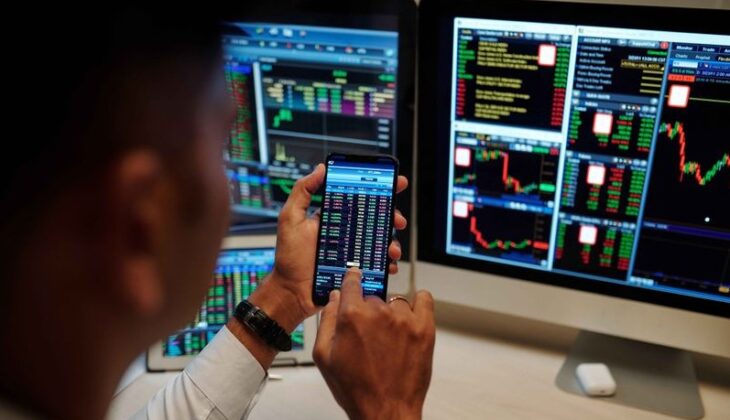
An Options Trading App gives market participants access to listed options contracts through a digital platform. These contracts can be used for different purposes, including hedging, directional trading and strategy construction, but they are more complex than simply buying shares and holding them.
For a beginner, the main challenge is not just learning how to place an order. It is understanding how option prices behave, how time affects a contract, what happens near expiry and why leverage can increase both potential gains and potential losses.
A useful Options Trading App should therefore support informed decision-making through clear contract details, risk information, order controls and reliable market data.
Understanding How Options Trading Works
Options are derivative contracts whose value is linked to an underlying asset such as a stock or index.
The two broad types are calls and puts.
A call option generally gives the buyer the right, subject to contract terms, to buy the underlying asset at a specified strike price. A put option generally gives the buyer the right to sell at a specified strike price.
The buyer pays a premium for the contract, while the seller receives the premium and takes on corresponding obligations.
Why Options Are Different From Shares
Shares represent ownership in a company. Options are contracts with a defined expiry and strike price.
This means an options trader must consider additional variables such as:
- Time to expiry
- Strike price
- Implied volatility
- Underlying price
- Contract premium
- Market liquidity
- Bid-ask spread
Because these factors can change quickly, options require more active risk management than many long-term equity investments.
What To Review In An Options Trading App
Not every platform presents derivatives information in the same way.
A trader can begin by checking whether the application clearly displays contract specifications, available expiries, strike prices, premiums and market depth.
Other useful features may include:
- Options chain
- Open interest data
- Price charts
- Order book
- Position details
- Margin information
- Profit and loss tracking
- Alerts and notifications
- Risk disclosures
The quality of presentation matters because options data can become difficult to interpret when too much information is shown without context.
Using The Options Chain Carefully
The options chain is one of the most commonly used tools in derivatives trading.
It generally displays available call and put contracts across multiple strike prices for a selected expiry.
Information Commonly Shown In The Chain
Depending on the platform, users may see:
- Last traded premium
- Bid and ask prices
- Open interest
- Change in open interest
- Trading volume
- Implied volatility
- Strike price
These figures can help traders study market activity, but none of them should be interpreted as a guaranteed trading signal.
High open interest, for example, shows outstanding positions rather than certainty about future price direction.
Understanding Premium Movement
An option premium does not move only because the underlying share or index changes.
Several variables affect pricing at the same time.
Time remaining until expiry matters because many contracts lose time value as expiry approaches. Implied volatility can also cause premiums to expand or contract even if the underlying asset has not moved dramatically.
This makes options pricing more complex than simply comparing an entry price with a current market price.
At this stage, traders who are familiar with other investment products such as Mutual Funds should recognise that derivatives operate under a very different risk and pricing framework.
Why Leverage Requires Strict Risk Management
Options can provide exposure with a relatively smaller upfront amount than directly purchasing the underlying asset, depending on the position.
That feature can also magnify risk.
A small change in the underlying price or volatility can result in a much larger percentage movement in the option premium.
Define Risk Before Entering A Position
Traders can establish several parameters before placing an order:
- Maximum acceptable loss
- Entry level
- Exit condition
- Position size
- Time horizon
- Expected volatility
Risk limits are more useful when defined before a trade rather than after losses begin to increase.
Some strategies can expose option sellers to substantial losses, so users should fully understand the payoff structure before entering such positions.
Order Types And Execution Quality
Execution becomes particularly important when option contracts have lower liquidity.
Wide bid-ask spreads can affect the actual price received by a trader.
Market And Limit Orders
A market order generally seeks immediate execution at available prices, while a limit order allows the user to define the maximum or minimum acceptable execution price.
In contracts with low liquidity, the difference between displayed prices and actual execution can be significant.
Traders should therefore check market depth and spreads rather than focusing only on the last traded premium.
Understanding Expiry And Settlement
Every listed option has an expiry date.
As expiry approaches, the behaviour of a contract can change because the remaining time value decreases.
Some traders close positions before expiry, while others may hold them depending on their strategy and the applicable settlement framework.
What Happens Near Expiry
Near expiry, traders should pay close attention to:
- Contract value
- In-the-money or out-of-the-money status
- Remaining premium
- Settlement obligations
- Available margin
- Exchange rules
Ignoring these factors can create unexpected account consequences.
The Role Of Charts And Technical Indicators
Many derivatives platforms provide price charts and technical indicators.
These tools may help traders examine short-term trends, momentum, support and resistance levels.
However, technical indicators are not predictive guarantees.
Two traders can interpret the same chart differently depending on their strategy, timeframe and risk tolerance.
Comparing Options With Other Market Products
Options should not be treated as a replacement for every other investment product.
Long-term investors may use equities, diversified funds or other instruments for wealth-building goals, while derivatives may be used selectively for hedging or tactical exposure.
The right product depends on the investor’s objectives, knowledge and risk capacity.
Before shifting attention toward derivatives, users should understand the difference between ownership-based investments and time-bound contracts.
Costs Can Affect Frequent Trading
Derivatives trading can involve multiple charges.
Depending on the transaction and platform, these may include brokerage, exchange-related charges, taxes and statutory levies.
Frequent trading can make such costs meaningful over time.
Traders should review the complete cost structure rather than focusing only on headline brokerage rates.
How Beginners Can Practise Better Decision-Making
New traders can benefit from learning the mechanics before taking large positions.
Start by understanding one contract at a time.
Check how its premium changes when:
- The underlying price moves
- Volatility changes
- Expiry gets closer
- Market liquidity shifts
Keeping position sizes small during the learning phase can also help reduce the financial impact of mistakes.
Reviewing Broader Market Exposure
Options traders may also track related asset classes to understand market context.
Sector trends, volatility conditions and overall sentiment can influence derivative pricing.
Investors who monitor instruments linked to the broader etf market may use that information as one part of wider market research, while still recognising that options involve separate contract-specific risks.
Conclusion
An Options Trading App can provide convenient access to derivatives markets, but the quality of the trading experience depends on more than fast order placement.
Users should understand contract pricing, expiry, leverage, liquidity, order types and settlement rules before taking positions. They should also review platform charges, security features and risk controls.
Options can serve specific market purposes, but they require disciplined decision-making and a clear understanding of potential losses. A well-designed application can support the process, while sound risk management remains the trader’s responsibility.
FAQs
1. What Is An Options Trading App?
It is a digital platform that allows eligible users to view options contracts, analyse market data and place permitted derivatives orders.
2. Are Options Suitable For Beginners?
They can be difficult for beginners because pricing, leverage and expiry add complexity, so learning the mechanics first is important.
3. What Is An Options Chain?
It is a table showing available call and put contracts across different strike prices and expiries.
4. Why Do Option Premiums Change Quickly?
Premiums can change because of underlying price movement, volatility, time decay, liquidity and other market factors.
5. Can Options Trading Lead To Large Losses?
Yes. Some positions can produce substantial losses, especially when leverage or option selling is involved.
6. Why Is Liquidity Important In Options Trading?
Higher liquidity can support tighter bid-ask spreads and more efficient execution, while lower liquidity can make trades harder to enter or exit.